THE JUNGLE - A JOURNEY THROUGH THE AMAZON
 Imagine you start a trip of a place where many large trees grow, in addition to beautifully colored plants and flowers ...
There are animals that make noises everywhere, but it is not easy to see them, because some are very small, others are hidden or climb trees. Although it seems hard to believe, here lives the greatest variety of plants and animals that inhabit the earth. Most people know this place as the jungle (Tropical Rain Forest).
THE TROPICAL RAIN FOREST
We will start the trip through the humid tropical jungle, a place where it is hot during the day as well as at night, regardless of the time of year. Maybe in the place where you live it rains only a few months and then the dry season begins. Well, something different happens here: the rain falls during most of the year, with variable intensity, ranging from short drizzles, to strong storms accompanied by winds and lightning.
The abundance of rains means that the rain forest is always full of water. Some can be seen with the naked eye, like the one that runs through rivers and streams. Instead, we cannot see the water that the soil absorbs to form an underground river. It is also not easy to distinguish the liquid stored by the roots of the plants or the water that turns into steam and floats in the air, giving humidity to the environment.
Water is important, as it contributes to making the jungle soil fertile. This is possible because leaves, fruit, and even tree branches continually fall to form a layer that covers the ground. Then tiny bacteria come into action, which, aided by the humidity of the environment, rot in a short time that vegetal layer, which allows the nutritive substances to return to the soil and serve as natural fertilizer for new plants. This layer of dead organic matter is called humus. Thanks to the combination of heat, water and fertile soil, the jungle allows many plant species to find what is necessary to grow in abundance. Thus it is possible to identify thousands of different plants and trees; from small mosses to trees of gigantic height.
The exuberant vegetation is essential for the tropical jungle, since the roots prevent the rain or the wind from dragging the fertile layer of the soil, in addition to offering food and shelter to the animals; Hence, in the jungle there is also the greatest variety of these on earth.
Another name given to this ecosystem is evergreen jungle, because some tree species keep their leaves for more than a year and others do not lose them at the same time, but in different seasons. Thus, while some trees drop their leaves, others sprout. As the new shoots grow in a short time, the jungle retains its greenness. This sets it apart from other ecosystems, where trees run out of leaves in drought and sprout until it rains again.
TROPICAL JUNGLE LOCATION
There are few regions in the world where the climate conditions allow the development of the jungle. These regions are located between the tropics and the equator, which are imaginary lines that divide the earth's map into zones. We can easily locate them, since the Tropic of Cancer is to the north of the planet, the equator in the center and the Tropic of Capricorn to the south.
The areas between the tropics receive more solar energy than any other part of the world, since the sun's rays fall almost directly on them. This causes the temperature in the intertropical region to be higher than in the rest of the world. Due to this, the water heats up to become steam and rise to the sky, where it cools down forming a wide strip of clouds that generate abundant rains. Thus, there are two essential characteristics for the jungle to grow: high temperatures and constant rainfall.
Most jungle lands are located on the American continent, in an area located between Mexico and Brazil. It is also possible to locate it in certain countries in Africa, Asia and Oceania.
THE LEVELS OF THE JUNGLE
If you stood in the middle of the jungle, you would see that it is divided into three layers or layers of vegetation, each with differences in temperature, the amount of light and the amount of water they receive. Although it is possible to distinguish one layer from another, the three are related to each other as parts of the same ecosystem. To explain this division, we will talk about the strata, one by one: the emergent, the vault and the scrub.
The Emergent, where the tops of the tallest trees stand out, reaching 45 meters and growing far from each other. It is often difficult to identify the species to which they belong, since their leaves, flowers and fruits are found at high altitudes. Most of the trunks of these giants are not very wide and once they protrude from the canopy of the smaller trees, they extend their branches. Among them are the ceiba, the shihuahuaco, the cedar, the mahogany, among others.
Here the temperature is very high. Therefore, although giant trees are the first to receive rain, it evaporates quickly. However, its leaves are small and hard, thus managing to absorb and accumulate water. The wind blows with enormous speed, moving the tops of the trees from one side to another; During some storms, it can be strong enough to knock them down. However, most giant trees have protrusions at the base of their trunks, called buttresses, which, as if they were thick, hardened roots, stop the tree, as they help it distribute its weight. Thus, although its roots are not deep, the tree has greater stability and resists the force of the wind.
The branches of the tallest trees are weak, even so they are the preferred place of some animals. The most common are birds of prey such as the gray falcon, the harpy eagle, the owl and the owl. They are all carnivorous and continually come down to hunt for food.
The vault, under the emerging layer is the next layer, the vault. In it, the temperature decreases a little, as does the intensity of the wind. Instead, it increases the humidity of the environment. Trees abound there that measure between ten and thirty meters high and grow very close to each other, so that their branches cannot extend very far.
These trees are the ideal place for animals that can hang on the branches; such is the case of some types of monkeys, the sloth or the anteater, who swing easily from one tree to another using their tail as if it were one more arm, they even hold onto it while looking for food. The squirrel and the bat also find their food in the vault. They are very well adapted to living high, so they do not need to go down to the ground.
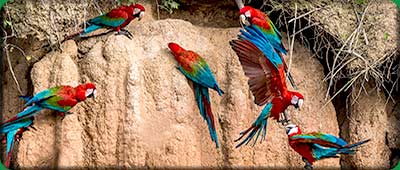
In the jungle trees, birds such as the toucan, the macaw and the parakeets, which are highly appreciated for the colors of their plumage, cannot be missing. Some more are the quail, the woodpecker, the hummingbird and the trogon.
Insects are a special case, as they can fly overhead, be glued to logs or close to the ground. In the rain forest there is a huge variety, such as fireflies, butterflies, ants, wasps, crickets and many more. Like other jungle animals, insects are very important to the existence of the ecosystem. An example of their function is that by bringing pollen from one flower to another, they collaborate in its fertilization.
Another example of the importance of animals in this ecosystem is given by the bats, birds and monkeys that feed on fruits, but cannot digest the seeds they contain and throw them into their droppings. Thus, they transport them from one place to another, increasing their germination possibilities.
The wind performs a similar function when it drags fruits full of seeds, which can fall to the ground or stay in holes formed between the branches of a tree. If they find a little soil and moisture there, they will germinate plants that grow only in the jungle. Such is the case of epiphytic, climbing and strangling plants:
- Epiphytic plants live on horizontal branches under the tree canopy. This allows them to protect themselves from the wind, to have shade when the sun's rays are intense and to receive abundant rainwater. Among them are mosses, ferns and a wide variety of orchids, highly prized for their shapes and colors.
- Climbers, also called lianas or vines, are plants with thin, flexible stems, which entangle themselves in the trunk of a tree to climb until they find sunlight. Once up, they develop thick crowns that join those of nearby trees. On their way to the top, the trunks of the climbers stop from the branches around them and hang from them. In this way, several trees are linked, sometimes with such force, that even when the trunk of one of them is cut, it does not fall. The opposite is also possible: when cutting a tree, several more fall with it, since they were tied by the climbers.
- Stranglers, or matapalos, are trees that grow on other trees. They are born as small plants that develop on a branch; over time they gain strength and their roots go down to the ground, from which they take more nutrients. Thanks to this, the stems of the choke are thickened and tangled in the tree that supports them. Later, branches and leaves grow. Consequently, the supporting tree stops receiving sunlight. In addition, the choke absorbs all available water and presses on the trunk, until the tree dies. Due to humidity, it rots in a short time and only one hole remains in its place. These plants produce fruits similar to figs, which serve as food for many birds, monkeys and bats.
The tops of the trees that make up the vault are almost joined to each other and form a kind of roof that covers the smallest plants. However, this roof of branches and leaves is not completely closed, but has holes, through which it allows sunlight and rainwater to pass through to the ground, although both arrive in less quantity than in the heights, for this reason, there is a third layer.
The scrub, very close to the ground, where the climate is different. There is little light here, but there is more humidity, since the water takes longer to evaporate and the trees prevent the steam from rising to the sky quickly. Here the air hardly moves, the temperature is high and hardly changes. The ground is covered with decomposing leaves and some brightly colored flowers stand out.
Due to the scarcity of light, plants have some difficulty growing, although there are some that do very well in the shade, such as fungi, ferns, small shrubs, and large, broad-leaved plants. The trees and palms of the scrubland grow to a maximum of three meters. In this place too, trees that reach great heights begin their lives, but later adapt to the climatic changes of the other strata.
The amount and type of scrub vegetation change as a clearing forms. This occurs when several tall trees fall, leaving a space where the rays of the sun and rain hit the ground with intensity. Thus, shrubs, small plants and soft wood trees grow in abundance. After a time, the nearby trees close the entrance of light, but it takes many years before the vegetation of the place is equal to that of the rest of the rain forest.
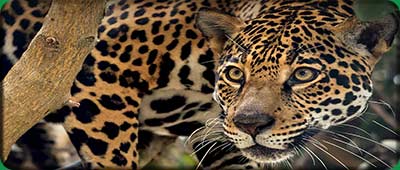
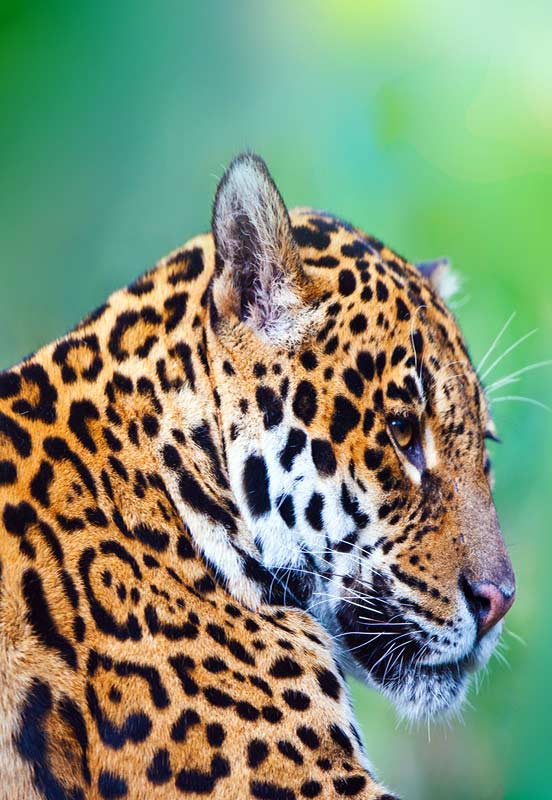
Most animals that live on the ground move noiselessly to avoid being seen, so they can hunt more easily and hide from predators or natural enemies. Some of smaller size are the agouti, the paca, the coati, the badger among others. Other larger ones are the tapir, the deer, the peccary and the armadillo. There are also carnivores such as the ocelot, the puma and the jaguar. Among the reptiles, it is possible to find the chameleon, the iguana and the lizard, in addition to the boa, the green snake, the sting viper and the shushupe.
There are animals that prefer to sleep during the day and go out to look for food at night. Some of them are the raccoon, the same as the owl. All of them are able to see well in the dark, so they fill the jungle with activity at night.
To complete the tropical jungle landscape, only the rivers are missing, which slide through long terrains and receive plenty of light. Thanks to it, numerous plants grow on its banks. Sometimes, rivers overflow and flood the soil around them, providing nutrients. They inhabit different varieties of fish and mollusks, the enormous black alligator, the otter, as well as frogs, toads and turtles.
THE IMPORTANCE OF THE JUNGLE
The world's rain forests provide benefits to all living things, even if they live far from this ecosystem. They are said to be the lungs of the planet, because they clean the air we breathe from a gas called carbon dioxide, which is produced by the exhaust of automobiles, factories, fires and even ourselves by breathing. When there is too much in the air, this gas is very harmful. If you stood for a few minutes near the smoke of a campfire you could feel it, because the excess of carbon dioxide and the lack of oxygen, would cause your eyes to water and you could not breathe.
The leaves of plants and trees absorb carbon dioxide from the air to mix it with the water and nutrients they take from the soil; by combining this mixture with light, they produce their food. This process is called photosynthesis. During it, carbon dioxide is transformed into oxygen, a gas we need to breathe. Due to the abundance of jungle vegetation, large amounts of oxygen are produced in it for the entire planet.
Jungles are also useful because they prevent excessive rains from eroding the jungle terrain and some nearby, since the vegetation grabs the soil between its roots, preventing the water from dragging it and taking away the fertile layer. Also, as you will remember, in the rain forest there is always water, which evaporates continuously. In this way, clouds and rain are generated, which is important for the climate of the whole world.
Several of the fruits we eat come from jungle trees, which man now cultivates to enrich his diet. Some of them are avocado, papaya, mamey, banana, pineapple and sapodilla.
For several years, the hevea, a jungle tree, became very important, because by making a cut in its trunk, an elastic substance called rubber was obtained, used to make toiletries and car tires. At present rubber was replaced by oil in the production of these articles. The same extraction technique is used to obtain the base of the chewing gum or chewing gum.
The wood of some jungle trees is used to obtain paper and fuel, as well as in the construction of houses and various furniture. A special case is that of mahogany, cedar and ebony, whose wood is highly appreciated by furniture makers for being hard, strong and beautiful. Because of this, they are called precious woods and their price is high.
Another example of the usefulness of certain jungle plants is the obtaining of healing substances, used in the preparation of medicines. Some scientists investigate the properties of new plants, trying to find a remedy for certain diseases that are currently incurable.
BUT ... THE TROPICAL JUNGLE HAS PROBLEMS
Despite the multiple benefits provided by the rain forest to man, many people harm it by depleting its resources. Thus, in a few years almost half of the world's jungle land was lost. Furthermore, so many are destroyed every day to fear that this ecosystem will disappear in a short time.
Among the causes are the felling of trees and the burning of vegetation to take advantage of the soil in the cultivation of corn, sugar cane, coffee or grass to feed livestock. In addition, the man cuts the trees looking for precious wood, and he does it wrong, because to facilitate his work, the fellers cut all the trees in an area, then identify the highest-priced trees and sell the rest for papermaking. , instead of making a reasoned selection before cutting down. This causes the loss of trees that will take many years to regrow, in addition to the disappearance of plants that have not even been investigated yet.
What those who try to take advantage of the jungle for agriculture, livestock or lumbering do not know, is that by eliminating trees and vegetation, the wind or rain drags the layer of leaves and fruits that covers the ground, so this erodes quickly. For this reason, the soil loses its wealth and in a short time the harvests are so bad that this land must be abandoned. However, even if planting is stopped there, sometimes the soil is so worn out that almost nothing can grow in it anymore. Thus, where greenery and life existed everywhere, only an arid and sterile space remains.
The decrease in trees and vegetation causes another problem: the increase in carbon dioxide, since there are fewer plants that absorb it and transform it into oxygen. Thus, said gas accumulates forming a cloud over the earth, which is very harmful since it does not allow the heat generated by the sun's rays to escape. This causes the temperature to rise throughout the planet. This increase causes warming of the soils, and consequently, that some crops burn and decrease the amount of food for the world's population.
This is even more worrisome because due to the loss of so many jungle trees, rainfall decreases worldwide, as the water vapor that forms the clouds is reduced. As a result, crops and the global climate are affected.
Given all this, it is evident that the only enemy of the rain forest is man, who in his desire to obtain economic benefits, prefers to destroy it than preserve it. Thus, the jungle disappears when roads, dams or airports are built in its place. At other times it is accidentally killed, during accidental fires.
The first affected by the destructive actions of man are the animals that inhabit the jungle, as they lose their home and food. Some leave in search of another place to live, but even if they find it, it is difficult for them to reproduce in it. Others cannot bear the change and die. Such is the case of the macaw, the harpy eagle and the toucan, which are at risk of extinction.
In addition, various animals are chased by hunters, who catch them to sell as pets or trade in their meat and fur. That is the main reason why the spider monkey, the armadillo, the caiman and the jaguar are threatened.
WHAT CAN WE DO?
The rapid disappearance of the rain forests is something that worries people interested in the environment, since it is causing serious problems for the entire planet. Therefore, solutions are sought to conserve the animal and plant species that live in this ecosystem. One of them is refusing to buy fur, feathers or meat from the animals hunted by the hunters, because if they do not find buyers, they will threaten their prey less and less.
A further resource would be to use jungle soil for crops only for one or two harvests and then clear other remote terrain. With this, the soil can regain its richness after a while, so it is possible that jungle vegetation will develop again.
Another way to rationally use jungle resources is to cut fewer trees and reforest cleared areas to grow new ones.
The most widespread option is the creation of ecological protection zones, in which attempts are made to protect plants and animals, avoiding excessive logging and hunting. In addition, it is intended to take advantage of local resources without affecting its balance.
We could also learn from our ancestors who established several cities in the middle of the rain forest and knew how to take advantage of what it offered them without affecting it. We can still admire the ruins of some of them.
Whatever the option to save the jungle, the important thing is to do it quickly, so that it continues to be the home of thousands of plants and animals.



.png)