Sustainable Tourism...
-
+51984618080 / +51994386099
-


- TAMBOPATA NATIONAL RESERVE
- Amazing adventure
TAMBOPATA NATIONAL RESERVE
Peru Amazonico


Sustainable Tourism...
Peru Amazonico
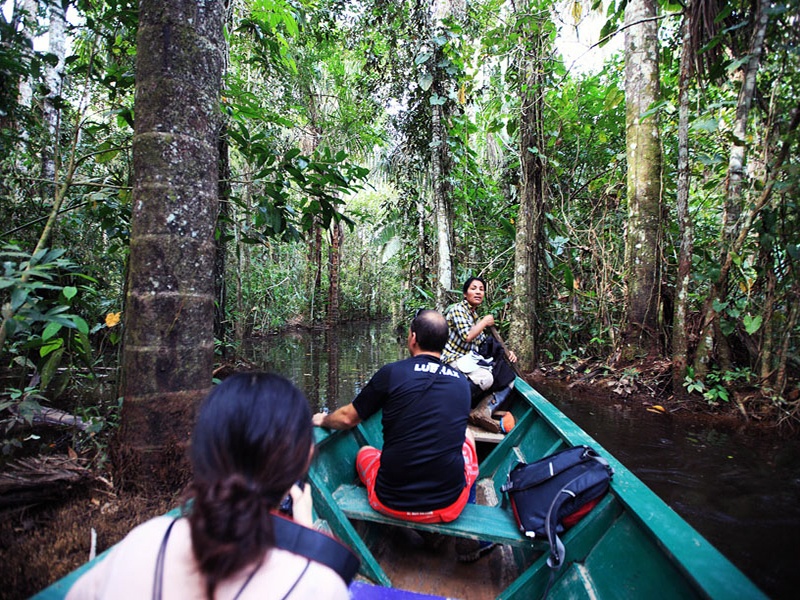
Tambopata National Reserve is a vast protected area, protecting 274,690 hectares of forest and pristine wilderness in Peru. It also contains a great diversity of habitats (altitudinal gradient), ranging from old-growth Amazon rainforest to wild cane and bamboo forests, from floodplains and wetlands to oxbow lakes and aguajales (palm swamps), within an altitudinal range of 200–400 m.a.s.l.
TAMBOPATA NATIONAL RESERVE - PERU AMAZONICO
|
RESERNA NACIONAL TAMBOPATA CON COLLPA CHUNCHO - PERU AMAZONICO
|
CHUNCHO MACAW CLAY LICK
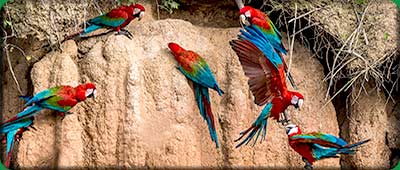
Chuncho lick is located in the Madre de Dios region, in the Tambopata National Reserve (Upper Tambopata sector), which is notable for its scenic beauty and for having the largest Clay Lick in Peru. The Chuncho Clay Lick (a clay wall on the riverbank known as the "lick") is where many species of parakeets, parrots, macaws, and other birds come to eat the clay, which is rich in minerals and salts, which these birds use as a supplement to their diet of seeds and fruits.
Chuncho Collpa is open to sustainable tourism activities promoted by the National Service of Natural Protected Areas of the Peruvian State. For the greater enjoyment and comfort of visitors to this protected natural area, there is an elevated viewing platform and restrooms (500 m). This infrastructure provides greater comfort for visitors and reduces the impact on the collapsing activity of psittacines and mammals. This sectoral action seeks to promote its conservation, restoration, and safe and responsible visits.
Tambopata National Reserve is a natural area protected by the Peruvian government. The Tambopata Reserve was created on September 4, 2000, by Supreme Decree DS No. 048-2000-AG. Tambopata National Reserve is located in the department of Madre de Dios, province of Tambopata, and extends into the districts of Tambopata and Inambari.
The objectives of the creation of the Tambopata National Reserve include three lines of action:
EVERYTHING YOU NEED TO KNOW ABOUT TRAVELING TO TAMBOPATA
Are there indigenous populations?
Tambopata National Reserve is home to the Ese Eja Native Community, an indigenous community that has lived in this tropical rainforest region for many years. Literally, the word "Ese Eja" means "people." There are three native communities of the Ese Eja ethnic group around the Tambopata National Reserve: Infierno (with 200 families), Palma Real (with 50 families), and Sonene (with 20 families).
Traditionally, the Ese Eja ethnic group is a hunter, fisherman, and farmer, although today many families have employment or business connections in tourism within Tambopata National Reserve. Perú Amazónico Tours collaborates with the Ese Eja community, working together on sustainable preservation projects and providing employment at the Hacienda Tambopata and Monte Amazónico lodges.
How to get to Tambopata?
To visit Tambopata National Reserve, you must first arrive in Puerto Maldonado, the entrance to the Tambopata Reserve and the capital of the Madre de Dios Region. There are daily flights to Puerto Maldonado. These flights arrive from Lima or Cusco, at least three times a day. Flights from Lima last 1 hour and 40 minutes. Flights from Cusco last 45 minutes (this varies by airline).
Departure times to the Tambopata National Reserve are designed to accommodate incoming and outgoing flights.
What is the best season to travel to Tambopata?
The Tambopata Reserve is seasonal. Although it can rain at any time of the year, the dry season is considered to be from April to November. The rainiest months are January and February. The advantage of visiting the Tambopata National Reserve during the dry season is that it offers less rainfall. Another advantage is that the macaws are more active, increasing the chance of seeing them at the macaw clay licks.
The climate in the area is a humid subtropical forest, where the average temperature is 26°C, fluctuating between 10°C and 38°C. These lower temperatures are explained by the Antarctic winds that irregularly enter the Amazon basin from the Andes, generally during the cold wind seasons of June and July (friajes). The highest temperatures are recorded during the months of September and October.
Hydrography
Tambopata National Reserve's main watersheds are the Tambopata and Heath Rivers. The Azul and Malinowsquillo Rivers are also found in the reserve, both of which flow into the right bank of the Malinowski River.
Tambopata River originates in the Peruvian-Bolivian Altiplano and extends for 402 km. Its main tributary is the Malinowski River. This river flows through the Tambopata National Reserve from east to west, serving as one of the main access points to the reserve's attractions. The Heath River originates in the Andes in the Puno region and flows into the Madre de Dios River for 200 km. Along its course, it is joined by tributaries such as the Bravo and Wiener Rivers. The Malinowski River, also known as the Carama River, rises on the outskirts of the reserve, in the native community of Kotsimba in the Inambari district. Its tributaries are the Pamahuaca, Azul, Malinowsquillo, and Agua Negra rivers on the right bank and the Manuani River on the left bank.
Flora
Chestnut - Bertholletia excelsa Non-Timber Forest Product of High Commercial Value in the Tambopata National Reserve. In the Diagnostic Process of the Development of the Tambopata National Reserve Master Plan, 1,713 species were reported, belonging to 654 genera from 145 families. For angiosperms (flowering plants), the classification proposed by the Angyosperm Phylogeny Group (APG III) was used, and for pteridophytes (ferns), the classification proposed by Smith et al. (2006) was used. Angiosperms comprise 1,637 species grouped into 127 families and 622 genera, or the most diverse families being Fabaceae (158 species), Rubiaceae (104 species) and Moraceae (66 species). Pteridophytes comprise 76 species from 32 genera and 18 families, the most diverse families being: Polypodiaceae (16 species), Pteridaceae (11 species) and Thelypteridaceae (9 species). Thus, on sedimentary plains, one can see aguajales (Mauritia flexuosa), as well as other commercially valuable species such as mahogany (Swietenia macrophylla), tornillo (Cedrelinga catenaeformis), cedar (Cedrela odorata), lupuna (Ceiba spp.), shiringa (Hevea brasilensis), rubber (Castilla elastica), and Brazil nut (Bertholletia excelsa). It should be noted that the latter species is the non-timber forest resource with the greatest economic potential developed in the Tambopata National Reserve, which is utilized under management plans approved and monitored by the National Service of Natural Protected Areas (SERNANP).
Fauna
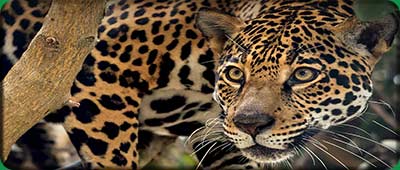
More than 632 bird species, 1,200 butterfly species, 103 amphibian species, 180 fish species, 169 mammal species, and 103 reptile species have been reported in the Tambopata National Reserve. Within the reserve, there are healthy habitats for the recovery and refuge of endangered populations of species such as giant otter (Pteronura brasiliensis), otter (Lontra longicaudis), and felines such as jaguarundi (Herpailurus yagouaroundi), puma (Puma concolor), jaguar (Panthera onca), ocelot (Leopardus pardalis), and margay (Leopardus wiedii).
Among the primate species are black spider monkey (Ateles chamek), saddle back tamarin monkey (Saguinus fuscicollis), emperor tamarin monkey (Saguinus imperator), red howler monkey (Alouatta seniculus), black-headed monkey (Aotus nigriceps), woolly monkey (Lagothrix lagotricha), the bolivian shrike monkey (Saimiri boliviensis), the squirrel monkey (Saimiri sciureus), the white-faced capuchin monkey (Cebus albifrons), and the black-faced capuchin monkey (Cebus apella).
Other notable mammal species among the wildlife include the white-faced peccary (Tapirus terrestris), the white-lipped peccary (Tayassu pecari), the collared peccary (Tayassu tajacu), the red deer (Mazama americana), the gray deer (Mazama gouazoubira), and the two-toed sloth (Choloepus hoffmanni) and three-toed sloths (Bradypus variegatus).
As for birds, the presence of the harpy eagle (Harpia harpyja), the great crested eagle (Morphnus guianensis), the common curassow (Mitu tuberosa), the unicorn curassow (Pauxi unicornis), and the wattled curassow (Crax globulosa) is notable. Almost all of the macaw species (Ara spp.) that inhabit Peru are found in the Tambopata National Reserve.
Other common species include the emerald boa (Corallus caninus), the machaco parrot (Bothriopsis bilineata), the boa constrictor (Boa constrictor), and the shushupe (Lachesis muta). It is also common to see the black caiman (Melanosuchus niger), the white caiman (Caiman crocodylus), and the taricaya (Podocnemis unifilis).
Fish are also widely varied, including the boquichico (Prochilodus nigricans), the zúngaro saltón (Brachyplatystoma filamentosum), the yahuarachi (Potamorhyna latior), the dorado (Brachyplatystoma flavicans), and the paco (Piaractus brachipomun). Non-commercial fish include the sábalo (Brycon spp.), the mullet (Schizodon fasciatus), and the catfish (Pimelodus sp.).
Tourism
Sunset at Lake Sandoval. The most visited tourist destination is Lake Sandoval. This 127-hectare body of water is home to abundant macaw populations in the vegetation surrounding the lake, and offers the opportunity to see herons, kingfishers, caimans, and otters. This tourist area offers accommodations for visitors.
Currently, it has a completely wooden path and provides access to disabled people. Through the Tambopata River basin, there is access to Lakes Cocococha and Sachavacayoc. Archived May 14, 2014, at the Wayback Machine. Both are abundant wildlife spots. Sachavacayoc has a camping area for tourists to spend the night. In addition to the lakes, there are also clay licks, places where animals come to ingest clay from the riverbanks. Between 5:30 and 9:00 a.m., a gathering of macaws and parrots forms a spectacle of color and wildlife for tourists. The main clay licks are Chuncho and Colorado, both located on the banks of the Tambopata River.
What should we bring on a trip to Tambopata?
Tambopata, along with Manu National Park in southeastern Peru, is one of Peru's top tourist destinations. If you love nature, then Tambopata is for you.
INCLUSIVE:
NOT INCLUSIVE:
THINGS YOU SHOULD BRING:




Available all year, minimum: 01 participants
Frequent questions:
How long in advance should you make a reservation?
To qualify for discounts for children, students or the Andean community?
Are there prices by type of accommodation?
What is the weather like in Tambopata?
TAMBOPATA NATIONAL RESERVE MAP- PERU AMAZONICO


|
|

|
|
|
|
|
|
|
|
|
|
|
|
|
|


.png)